JAI HIND

JAI HIND

Wednesday, May 18, 2011

ABOUT AL-QAEDA NEW CHIEF-SAIF AL-ADEL 18/05/2011


Who is Saif al-Adel, the new Al-Qaeda chief?

According to various media a former Egyptian military officer turne

d al-Qaeda militant has been chosen to head Osama bin Laden's terror network temporarily until the slain leader's successor is officially named.

Al-Qeda leader Osama Bin Laden was killed by the US forces on May 1, leaving the top job vacant. Terrorism experts across the world are offering their predictions as to who will take over the terrorist outfit's top job.

Saif Al-Adel, who has been named to head the terror outift for now, is believed to have served as a member of the Egyptian Islamic Jihad, the group responsible for the assassination of former Egyptian president Anwar Sadat in 1981 and is also believed to have fought Soviet forces in Afghanistan. He is reportedly under house arrest, but may have been released.

"Al-Qaeda's interim leader is Saif al-Adel, who has long played a prominent role in the group," CNN said citing Noman Benotman, who has known the al-Qaeda leadership for more than two decades.


Remarks: Al-Adel is thought to be affiliated with the Egyptian Islamic Jihad (EIJ), and is believed to be a high-ranking member of the Al-Qaeda organization.

CAUTION: Saif Al-Adel is wanted in connection with the August 7, 1998, bombings of the United States Embassies in Dar es Salaam, Tanzania, and Nairobi, Kenya.

REWARD: The Rewards for Justice Program, United States Department of State, is offering a reward of up to $5 million for information leading directly to the apprehension or conviction of Saif Al-Adel.


Saif al-Adel. Aliases: Muhamad Ibrahim Makkawi, Seif Al Adel, Ibrahim Al-Madani. Date(s) of Birth Used: April 11, 1963; April 11, 1960.Birth Place: EGYPT and he speaks arabic.


Rahul Vallamber


AL-QAEDA NEW CHIEF: SAIF AL-ADEL, EQYPTIAN. 18/05/2011

Al-Qaeda has chosen a former Egyptian Special Forces officer as interim leader in the wake of Osama bin Laden's death earlier this month, CNN reports.

Saif al-Adel, a top al-Qaeda strategist and senior military leader, has been tapped as "caretaker" chief of the group, CNN reported on Tuesday, citing former Libyan militant Noman Benotman, who has renounced al-Qaeda's ideology.

Pakistan's The News newspaper corroborated the claim, citing unnamed sources in an article datelined Rawalpindi, a city home to the military headquarters of the Pakistani Armed Forces near the capital Islamabad.

The decision to chose Adel, also known as Muhamad Ibrahim Makkawi, came as militants grew increasingly re

stive over the lack of a formal successor to bin Laden, who was killed in a dramatic US commando raid deep in Pakistan on May 2, Benotman told CNN.

Bin Laden's long-time deputy Ayman al-Zawahiri, another Egyptian, is considered to be his presumed successor.

Benotman said the appointment of Adel on a temporary basis may be a way for the group to gauge reaction to having someone outside the Muslim holy region of the Arabian Peninsula at the helm.

Rahul Vallamber

Thursday, May 5, 2011

After affect of osama death: Suicide bomber rams Iraq police station, kills 20 on 5/05/11

BAGHDAD – A suicide bomber driving an explosives-packed vehicle rammed his way into a barricaded police compound Thursday and killed 20 police officers in the second major deadly blast in Iraq this week.

Iraqi officials have been scrambling to show they're in control of security in the wake of Osama bin Laden's death on Monday, but the uptick of bombings suggests that al-Qaida-linked groups in Iraq remain a threat despite the death of their ideological patron.

There was no immediate claim of responsibility for this bombing

or for another on Tuesday that killed nine people in a Shiite neighborhood in Baghdad. But the types of targets — Iraqi security forces and Shiite Muslims — indicate al-Qaida in Iraq's involvement.

"The attack bears the hallmark of al-Qaida which is renewing its efforts to dest

abilize the country," said a member of the region's provincial council, Hamid al-Milli.

The blast in the mainly Shiite city of Hillah, about 60 miles (95 kilometers) south of the capital Baghdad also underscores Iraq's fragile security at a time when U.S. forces are preparing to leave the country.

Violence in Iraq has dropped dramatically since just a few years ago, and Iraqi forces have firmly taken over security responsibilities from American troops. But many Iraqis and U.S. officials worry question whether the departure of the roughly 46,000 American soldiers still here will leave their country more vulnerable to violence.

Al-Milli said 20 policemen were killed and 40 more were wounded in the Hillah bombing. He said the car was believed to have been loaded with about 330 pounds (150 kilograms) of explosives. The attacker sped toward the police building and the guards did not have a chance to shoot and stop him, he said.

The suicide bomber plowed his way into a metal barrier designed to keep vehicles ou

t of the police compound, leaving behind a crater a meter (yard) deep and three meters (yards) wide, said a police official in Hillah.

The reception building and a security tower near the entrance were leveled, and pieces of the damaged vehicles were flung around the compound.

The police officers were assembled for their morning shift ch

ange when the outgoing officers hand over equipment and weapons to the da

y shift, said the police official. About 60 or 70 policemen would have been in attendance, he said.

AP television footage showed ambulances and police vehicles with blaring sirens racing to and from the blast sight. A bulldozer moved debris from the scene, where twisted metal, spots of blood and piles of bricks and rubble lay. Emergency teams lifted bricks and iron bars from the debris, while shards of glass littered the site.

The fact that the bomber was able to wipe out so many policemen in one blast immediately raised questions about security at the building.

The head of the Babil Provincial Council, Kadim Tuman, said he was holding officials at the building and at the central government accountable.

"This building was not well fortified and the changing of policemen's shifts was exposed to the enemy," he said. The central government had also failed to provide extra police and explosive detection equipment, he said.

Hillah's proximity to a mainly Sunni area at one time referred to as the Triangle of Death has made Hillah a frequent target of Sunni extremists. In 2005, a suicide car bombing targeted at security recruits killed 125 people in the city. Last year, 45 people were killed outside a textile factory when two parked car bombs exploded.

Iraqi officials said in the immediate wake of bin Laden's death that they were beefing up security around the country amid fears that insurgent groups would try to carry out strikes to demonstrate their continued strength despite the al-Qaida leader's killing.

Iraqi security forces have taken steps to show they're in control. On Wednesday, Iraqi security officials showed confessions of what they said were al-Qaida members who had killed a journalist from a Shiite TV station. On Thursday, the Interior Ministry displayed a cache of rockets and other munitions that had been seized this week.

The head of the ministry's intelligence department, Maj. Gen. Mahdi Hadi al-Fikkaiki, defended the government's ability to protect Iraq, and said his department had foiled many terror attacks before they'd been carried out. But he acknowledged that there was no way to make the country 100 percent safe.

Fawaz A. Gerges, a London-based expert on al-Qaida, said offshoots like al-Qaida in Iraq may try to carry out terror attacks as a way to show the American government and local authorities that they still exist and remain dangerous.

"I think Iraqis should brace themselves for more insidious attacks in the next few days and the next few weeks," he said.

Jai Hind

Rahul Vallamber

Tuesday, May 3, 2011

osama bin laden dead photo leaked 3/05/2011

osama"s dead body first photo


osama bin ladens first dead body photo leaked.


jai hind


rahul vallamber

Monday, May 2, 2011

OSAMA Died and First Reaction In Pakistan with a bomb Blast 2/05/2011

AFTER EFFECT OF OSAMA DIED

4 killed, 10 injured in mosque blast in Charsadda, NW Pakistan


At least four people including three children and one woman were killed and 11 others were injured in a blast that ripped through a mosque Monday afternoon in northwest Pakistan, local television channels reported.According to local Urdu channel Geo News, the roadside explosion went off near the mosque in the limits of a police station in Charsadda, a city about 40 km northeast of Peshawar. Six to seven policemen were among the injured, some in critical condition.Security agencies cordoned off the area and the injured were shifted to the hospital where emergency was imposed. A bomb disposal squad was sent to the site and rescue operations were launched.The mosque was damaged in the blast. The wall of the nearby police station was also severely damaged.This area had earlier came under attack last month when the convoy of JUI-F party chief Maulana Fazlur Rehman was targeted.Security in the area was beefed up earlier in the morning when news about al-Qaida chief Osama bin Laden's death spread out. Local media reports said the al-Qaida-linked Taliban have vowed more suicide attacks across Pakistan, even against the country's president Asif Ali Zardari.


Jai Hind

Rahul Vallamber

osama bin laden died

U.S. President Barack Obama was preparing to announce Osama bin Laden was dead when word got out and crowds started gathering late Sunday outside the White House in Washington and at Ground Zero in New York City.
From Times Square to Ground Zero to the White House, the familiar chant of "USA , USA" resonated as citizens learned that the Osama bin Laden was dead.

The announcement sparked immediate jubilation. In Time Square, people gathered around giant news tickers to see the latest updates. Pam Sather recalls the moment she heard the world's most wanted terrorist was dead.

"It is just amazing, we were just walking out of a pizza joint," she said. "And, all the sudden we saw in the bar on the television. We were just glued." A firefighter waves to the crowd as people celebrate after Al Qaeda leader Osama bin Laden was killed in Pakistan, during a spontaneous celebration in New York's Times Square, May 2, 2011

At the White House, young Americans climbed trees, climbed light posts, donned American flags and sang the national anthem.

The feeling was euphoric as thousands of Americans gathered in front of the White House just hours after U.S. President Barack Obama made the announcement that Osama bin Laden was dead.

For many, including student Kathryn Costello, it became a moment of reflection, thinking back to the nearly 3,000 lives lost on September 11, 2001, an act of terror Osama bin Laden claimed responsibility for.

"I think a lot of us have grown up with the memory of 9/11 and sort of this constant notion of a threat and the danger of terrorism," said Costello. "So this is a triumphant moment for all of us."

For many U.S. soldiers, including U.S. Marine Jake Diliberto, this is a day they have been fighting for.

"We feel really really vindicated that we finally got him," he said. "This is our generation's VE, VJ. This is our generation's victory and enduring freedom day."

Patriotism filled the air outside the White House into the early hours Monday.

Two hours after the announcement, with celebrations still roaring, the U.S. Secret Service brought in barriers to push back revelers from the White House.

International student Sunny Shih said the importance of the historical moment reaches beyond the gates of the White House.
"This is a very important moment for not only the U.S.A., but for the entire world," said Shih.

Many world leaders are praising the achievement of U.S. military forces Sunday in Pakistan, who killed Osama bin Laden, captured his body and buried it at sea. But they are cautioning bin Laden's death elevates security risks around the world.

Back at the White House, the focus remains on the justice the president said was delivered.

Jai Hind
Rahul Vallamber

Wednesday, March 16, 2011

5 hurt in grenade attack in Guwahati, on 14/03/ 2011


Guwahati, Mar 14(NNN): A grenade attack on the Assam Pradesh Congress Committee (APCC) headquarters in Guwahati on Monday evening left at least five persons injured.
The anti-talks group of the outlawed United Liberation Front of Asom (ULFA) has claimed responsibility for the attack.
Senior police officials aren’t sure what caused the blast at the APCC media cell near the entrance gate of Rajiv Bhavan at 6.55 pm. “It could have been a grenade lobbed by some passersby or, going by the intensity and sound, a remote-controlled IED,” said an officer. But DGP Sankar Barua said it was too early to ascertain the cause. “We hope to catch the culprits after a thorough investigation,” he added.
The blast damaged much of the media cell leaving spokesperson Mehdi Alam Bora and a security guard bleeding profusely. They were rushed to the Guwahati Medical College Hospital while APCC general secretary Ranjan Bora and spokespersons Kalyan Gogoi and Akshoy Rajkhowa escaped with minor injuries.
The ULFA had during Prime Minister Manmohan Singh’s visit in February threatened to target Congress leaders and members in poll-bound Assam. “The Congress needs to be taught a lesson for splitting our organization,” said the outfit’s military chief Paresh Barua from somewhere on the Myanmar-China border.

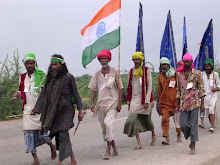
The outfit showed it meant business by attacking a Congress gram panchayat leader in eastern Assam’s Tinsukia district last month and following it up with a grenade attack on a Congress office in Golaghat district.

jai hind
Rahul Vallamber